
High-Voltage Hermetic Seals
High-Voltage Hermetic Seals Are Bi-directional Seals for Vacuum or Pressure
Any type High voltage wire or cable up from 1-30 kV, single or multiple cables, with or without high voltage cable connectors. Depending upon the voltage, a wide variety of high voltage cables or wires up to 32 kV can be provided in a wide variety of hermetically sealed passthrough designs for low or high pressures and vacuums and temperature ranges between -200 to 200C. Cable insulations include PVC, silicone, XLPE, PTFE FEP Teflon® and Kapton®. Listed below are existing hermetic high voltage feedthru designs. Custom designs are also readily available upon request. All PAVE hermetic seals will pass either a vacuum helium leak test 10^-6 to 10^-9cc/sec leak rate or a pressurized gas bubble leak test. PAVE hermetic epoxy seals are much more robust also than fragile glass or ceramic seals.
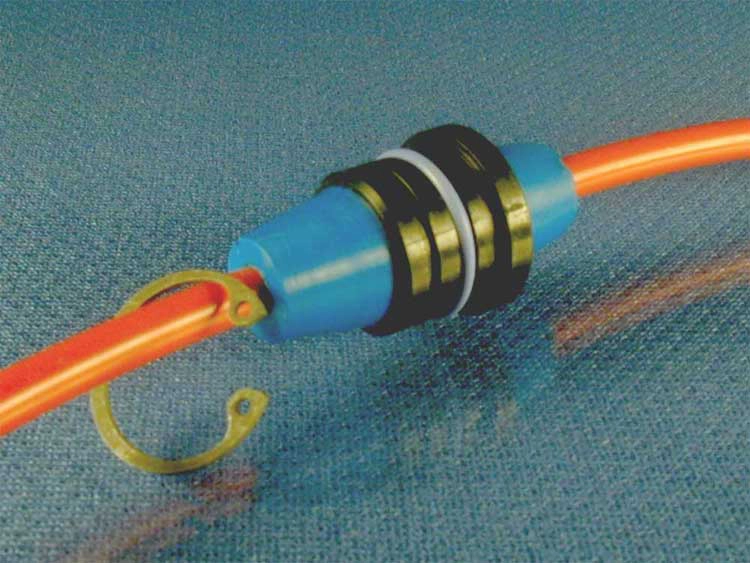
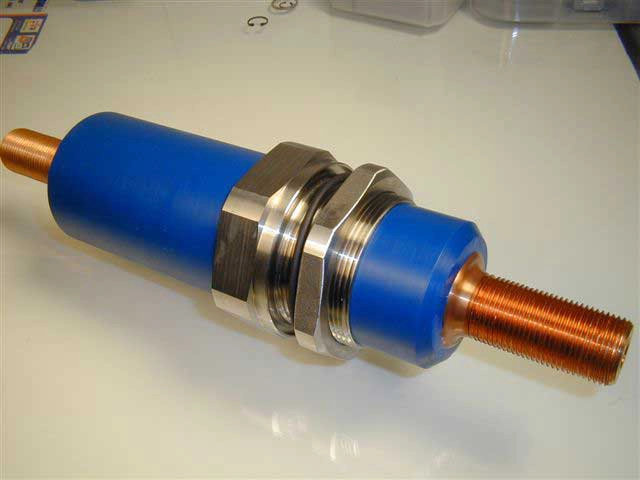
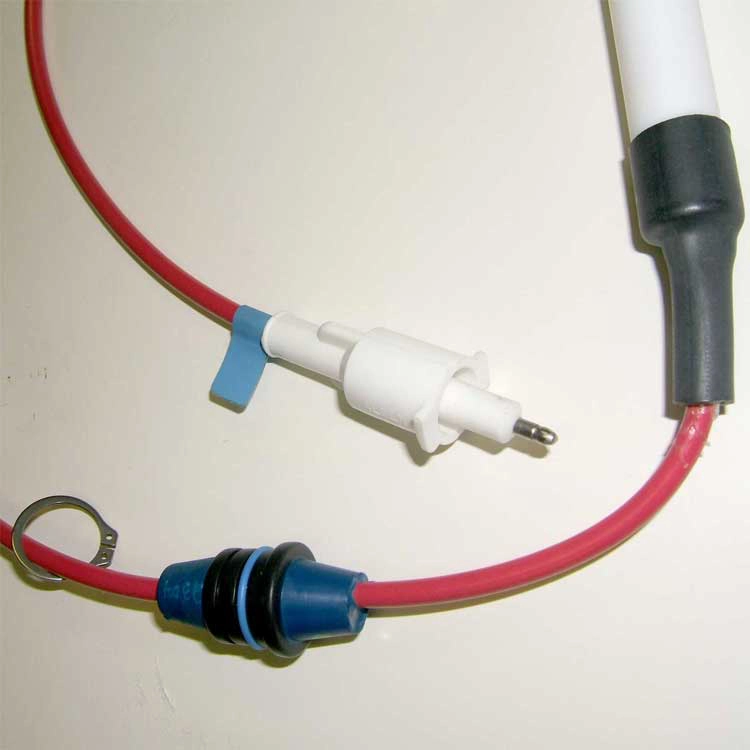
High-Voltage Wire Feedthrough Seals Specifications
- Dielectric Strength: >17.4 kV/mm
- Dielectric Constant: 5.3@ 1 Mhz
- Volume Resistivity: @ 125° C1x1015 Ohm-cm
- Dissipation Factor: 0.03 @ 1 Mhz
- Hardness, Shore D: 96
- Low Vacuum Outgassing: TML: 25% ;CVC<: .01%
- High Fungus Resistance: MIL-STD–454J/4
- Specific Gravity: @ 25° C 2.3
- Compressive Strength: >948 kg/cm2
- Compressive Modules: 7.7×10⁴ kg/cm2
- Tensile Strength: >470 kg/cm2
- Water Absorption (24 hours): 0.03%
HERMETIC EPOXY TEMPERATURE RATING (Epoxy is proprietary and not sold separately)
PAVE Wire Seal® 150 | PAVE Wire Seal® 200 | PAVE Wire Seal® 200FR |
|---|---|---|
-40° to 150° C | -60° to 200° C | - UL94V-O flame retardant - Toxicity Rating K (NASA MAPTIS) - Odor Rating A - Thermal Vacuum Stability Rating A - Flammability Rating X - FM Class 3600, EExd II 90° C TI |
The PAVE-Seal® epoxy is impervious to most oils, solvents, fuels, freons, gases, etc. Epoxy samples are available upon request for customer’s evaluation for any specific chemical compatibility.

| Installation Port or Size | Type Wire Insulation | Total Wires or Pins | AWG# Voltage | PAVE Description Codes, Housing & Wires | Type Seal | Drawing # | |
|---|---|---|---|---|---|---|---|
| 1" o-ring face seal | dual sided SHV | 1 w/ isolated shield | shv 7kV | VS15L-SS-150-SHV-SHV | IN STOCK hermetic connector | 1518 | |
| 1" o-ring face seal | dual sided MHV | 1 w/ isolated shield | mhv 5kV | VS15L-SS-150-1-MHV-MHV | hermetic connector | 2954 | |
| ⅛ NPT | FEP | 1 | 6kV | PT2-B-80-1-FEP16-6-6 | feedthru | 3832 | |
| ¾" piston o-ring | FEP | 1 | 20kV shielded coax RG58 | SPF12-E-150-1/1/1-HRG58/E20/BUS20-38-12 | passthru | 5343 | |
| ⅜" piston o-ring | silicone | 1 | 26 15kV | SP6L-E-150-1-1786580-30N-3-26 | feedthrough | 2691-1 | |
| ⅜" piston o-ring | silicone | 1 | 26 15kV | SP6L-E-150-1-1788425-30N-5-24 | feedthrough | 1359 | |
| ½" piston o-ring | FEP | 1 | 15kVdc 18 | SP8S-E-150-1-Reynolds 295-0062-15-15 | feedthrough | 2631 | |
| ¾" piston o-ring | shv & pvc | 1 | 20Kv | SP12-E-150-SHV-1-B8866-SHV-14 | 4439 | ||
| ¾" piston o-ring seal | PE | 1 #18 | #18 30kVDC | SPF12-E-150HV-1-B200PA48-20T-28T | feedthru cable | 5001 | |
| ¾" piston o-ring | PVC & PE | 1 | 30kVDC | SPF12-E-150-1-B200PA48-36T-5T | hermetic seal | 2569 | |
| ¾" piston o-ring | ps | 1 | 18 30kV | SPF12-E-150-1-B200PA48-77T-22 | feedthrough | 2370 | |
| ¾" piston o-ring | ps | 1 | 18 30kV | SPF12-E-150-1-B8866-36-24 | feedthrough | 1534 | |
| ¾" piston o-ring | ps | 1 | 20 30kV | SPF12-E-150-1-Belden9867/BUS16-36-40 | feedthrough | 2439 | |
| ¾" piston o-ring | ps | 1 | 20 30kV | SPF12-E-150-1-Belden9867-48-48 | feedthrough | 2311 | |
| ¾" piston o-ring | pvc | 1 | 18 30Kv | SPF12-E-150-1-B200PA48/BUS20-26-3.8 | feedthrough | 2809 | |
| n/a | PTFE | 1 | 5Kv | HARWIN W2222-00 FEEDTHROUGH INSULATOR | feedthrough | 5159 | |
| ½" piston o-ring | silicone 5KV | 2 | 5kV | SP8L-E-150HV-2-HV22-10-10 | feedthru | 4480 | |
| ¾" piston o-ring | PTFE | 2 | coax 20 30kV | SPF12-E-150-1/1/1-RG59U/E20/BUS20-17-15/16 | feedthrough | 2921 | |
| ¾" piston o-ring | pvc | 1 | 22 30kV | SPF12-E-150-1-PC22/BUS20-40-24 | feedthrough | 3309 | |
| ¾" piston o-ring | rubber | 1 | 18 5kV | SPF12-E-200-1-RB18-8-SOC | feedthrough | 3134 | |
| ¾" piston o-ring | MHV solder cup | 1 | 22 3kV | VS12L-SS-150-1-MHV-SC | hermetic connector | 2966 | |
| 1-¼" o-ring face seal | cable seal | 8 | 7 | VS18-SS-150-7/1-RG174/REYNOLDS2896-85FT-10FT | RG174 | 4333 | |
| 1¼" o-ring face seal | Farnell 5602 cable | 1 | 70 ohm, 4kV | VS18-SS-150-1-5602-5-5m | feedthrough | 3167 | |
| ⅛" NPT | PTFE | 1 | 24 10kV | PT2-SS-150-1-10KV COAX | feedthrough | 1151 | |
| custom flange face seal | PTFE | 2 | 5kV | FL18.9/5.6-AL-150-2-TE24-PIN-6 | 5006 | ||
| 1¼" flangeface seal | PTFE | 2 | FL20/8-AL-150-2-TE24-PIN-6 | 24 | 3762 | ||
| 1¼" o-ring face seal | PTFE | 2 | coax 18 kvdc | VS18-SS-150-5/1-RG316/REYNOLDS HV-36-36 | feedthrough | 3509 | |
| 17,37mm piston o-rings | polyimide, ETFE | 2 | 10kv | SP11H-150-1/1-K20/TZ20-24-24 10kv, 6k psi | cable | 6070 | |
| ¾" piston o-ring | PTFE | 2 | 24 4kV | SPF12-E-150-1/1-TE24-FO1B090-24-24 | feedthrough | 1659 | |
| 1" o-ring face seal | silicone | 2 | 22 15kV | VS15L-SS-90-2-HV22-60-24,15KV | feedthrough | 1500 | |
| 11mm piston o-ring | silicone | 3 | 30Kv | SP7XL-E-200HV-3-FEP20-7-18 | 3674 | ||
| ¾" piston o-ring | PTFE | 3 | rg59 7.5kV | SPF12-E-150-1/1/1-RG59U/E20/BUS20-36-15 | 2.5kV coaxial plus 2 wires | 4998 | |
| ¾" piston o-ring | PTFE | 3 | rg59 7.5kV | SPF12-E-150-1/2-RG59U/E20-33-4 | feedthrough | 2822 | |
| ¾" piston o-ring | PTFE | 3 | 20 15kV | SPF12-E-150-1/1/1-1679611/TEE18/22-24-24 15kv | feedthrough | 2252 | |
| 1" piston o-ring | PTFE | 4 #12 | #12 15kvVdc | SP16S-E-150HV-4-CRT12-72-72 | passthrough | 5368 | |
| 17.37mm " piston o-ring | PE/PVC | 7 | 22 15kv | SP11L-E-150-1-Belden8868-60-20CM 15kv | feedthrough | 2392 | |
| 61mm o-ring face seal | silicone | 7 | 16 20kV | SPF38-E-150-7-16SIL-14-14, 20kvdc | feedthrough | 2266 | |
| 1"piston o-ring | PTFE | 8 #22 | #22 15kVdc | SP16S-E-150HV-8-CRT22-72-72 | passthrough | 5367 | |
| ¾" o-ring face seal | XLPE | 12 | 24 5kV | VS12L-AL-150-12-Judd24-24-15 | feedthrough | 2600 | |
| ¾" piston o-ring | pvc | 1 | 18 30kV | SPF12-E-200-1-PC18-8-SOC | feedthrough | 2304-1 | |
| custom o-ring flange night vision | PTFE | 19 | 26, 7kvdc | FL-SS-150-18/1-TE26/HV18-24-11 | feedthrough | 2528 | |
| 0.996" piston o-ring | silicone | 22 | 22 3kv | SP16-E-150-22-HV22-18-18 | feedthrough | 2959 |